




Research
International Collaborated Projects
1.
Optimized use of feed resources for high lifetime productivity of dairy cows and consequences on enteric methane release
Duration: 3 years (2016-19) Budget: Rs. 56.7 lakhs (Indian side) Principal Investigator: Dr. Raghavendra Bhatta Associates: Dr. P. K. Malik, Dr. A. Mech Collaborator details: Dr. Eva Schlet, University of Kassel, Germany
Salient Achievements
Total twenty eight dairy farms located at rural-urban interface were identified and surveyed for the animal husbandry practices
Feed and fodder samples were collected and analyzed for proximate principles and fibre fractions
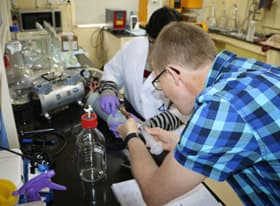
Samples were also analyzed for in vitro methane production potential
Enteric methane emission were quantified in cattle and sheep using SF6 and LMD techniques in order to optimize the LMD technique for methane quantification
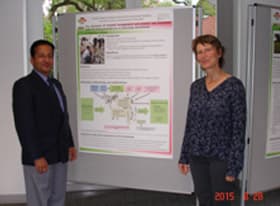
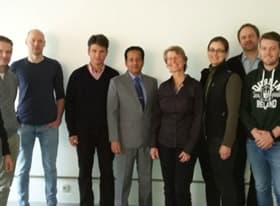
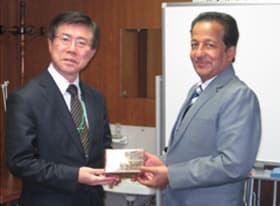
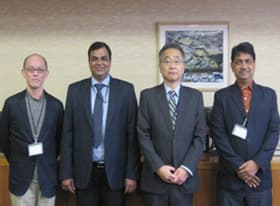
Exchange visits of Scientist were accomplished
2.
Methane mitigation using unexplored phyto sources in ruminants and their effect on rumen microbial diversity
Duration: 2 years Budget: Rs. 4.2 lakhs (Indian side) Principal Investigator: Dr. Raghavendra Bhatta Associates: Dr. P. K. Malik, Dr. A. P. Kolte Collaborator details: Dr. Yutaka Uyeno; Shinshu University, Nagano, Ina, Japan
Salient Achievements
Two exchange visits of scientific personnel from each participating country were accomplished
The qualitative & quantitative screening of phyto samples collected from Hiamalyan region were carried out for tannins, flavonoids, terpenoids, saponins, glycosides, alkaloids and phlobatannins
Phyto samples were evaluated for in vitro methane production potential and promising sources for reducing methane production were identified
3.
Strategic improvement of efficiency of Vitrification of preantral follicles and embryos of sheep and buffalo: Genomic changes with reference to apoptosis and developmental competence
Duration: 3 years (July, 2017 to June, 2020) Budget: Rs. 36.5 Lakhs (Indian Side) Co-ordinator: Dr. P. S. P. Gupta (PI) Associates: Dr. S. Nandi and Dr. S. Mondal
Salient Achievements
Exchange visit of Indian Scientists to Hungary was completed
Three kinds of media with different compositions are being tried to vitrify preantral follicles
4.
Regional network for skills exchanges on dynamic adaptation of ruminant production systems to a changing environment
Duration: 3 years (July, 2012 to June, 2015) Budget: Rs. 8 Lakhs (Indian Side) Co-ordinator: Dr. P. S. P. Gupta Associates: Dr. K .Giridhar, Dr. S. Jash
Salient Achievements
Training programs on LASER software (for the use of management of Animal Production systems) and NIRS for assessing feed and fodder quality were conducted
Technical assistance was provided to a Masters degree intern from France for her thesis work on Feed and Fodder quality evaluation with NIRS
5.
Growth factors in small oocyte development: Proteomics and genomic approaches
Duration: 2 years (July, 2011 to June, 2013) Budget: Rs. 5 Lakhs (Indian Side) Co-ordinator: Dr. P. S. P. Gupta Associates: Dr. S. Nandi & Dr. A. Dhali
Salient Achievements
In addition to the exchange visits from both the countries, research was done on the role of amphiregulin and neuregulin on oocyte cumulus expansion and biochemical profiling of different size categories of ovarian follicles
Transcript profiling of GDF-9, FGF-2, FGF-10, FGF-8 and GAPDH in immature goat oocytes was done. Targeted fragments of these transcripts were PCR amplified, cloned and sequenced.
6.
Increasing the productivity of cattle in India and Australia through rumen fungal treatments
Duration: 3 years (July, 2003 to November, 2006) Budget: Rs. 79 Lakhs Project Team (NIANP, Bengaluru) Dr. K. T. Sampath (Project Leader), Dr. C. S. Prasad, Principal Scientist, Dr. Manpal Sridhar, Senior Scientist, Dr. S. Anandan, Senior Scientist, Dr. M. Chandrashekaraiah, Scientist(SS), Mrs. A. Tulasi, Scientist(SS)
Salient Achievements
In addition to the training received by Indian scientists and exchange of visits from both the countries, anaerobic fungi were isolated from a large number of small and large ruminants, zoo ruminants and large herbivores. The rumen liquor samples were restricted to animals of the Institute while the dung samples were collected from various districts of Karnataka as well as other states. All the five recognized genera of gut fungi were successfully isolated. Existence of Cyllamyces,a sixth genera was reported in Buffaloes for the first time in the Indian sub-continent. Four of the superior fiber degrading cultures selected based on results of in vitro gas production were tested for their relative abilities to degrade plant fiber in cattle feeding trials. A feeding trial was carried out in Holstein heifers using three groups of six animals as follows: (1) basal diet (control); (2) basal diet plus 6.6 g/day anhydrous sodium sulphate (sulphate; 1.45 g S/day) and (3) basal diet plus 8.0 g/day anhydrous sodium MPS (Na-MPS; 2.88 g S/day).Supplementation of a S-deficient low quality roughage diet, with either MPS or sodium sulphate in conjunction with compensatory N, improved rumen fermentation through an apparent increase in microbial protein synthesis.